QAC (Quantum-computing Aided Composition) was coined in 2019 to describe the use of quantum computing in the creative compositional process. With it, creative practitioners can create, for example, sound and music with quantum circuits.
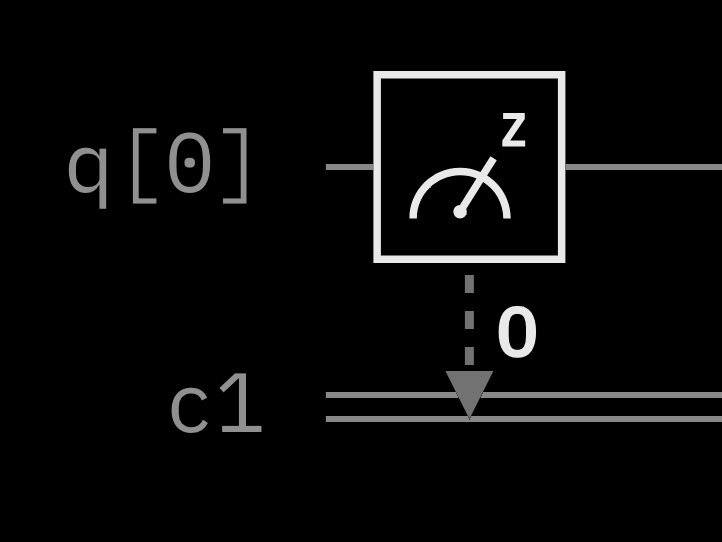
Let's start to imagine a single qubit in its energy relaxed state |0> as a simple sine wave sound
(keep touching the node to listen to it)
As a quantum circuit this would look like:
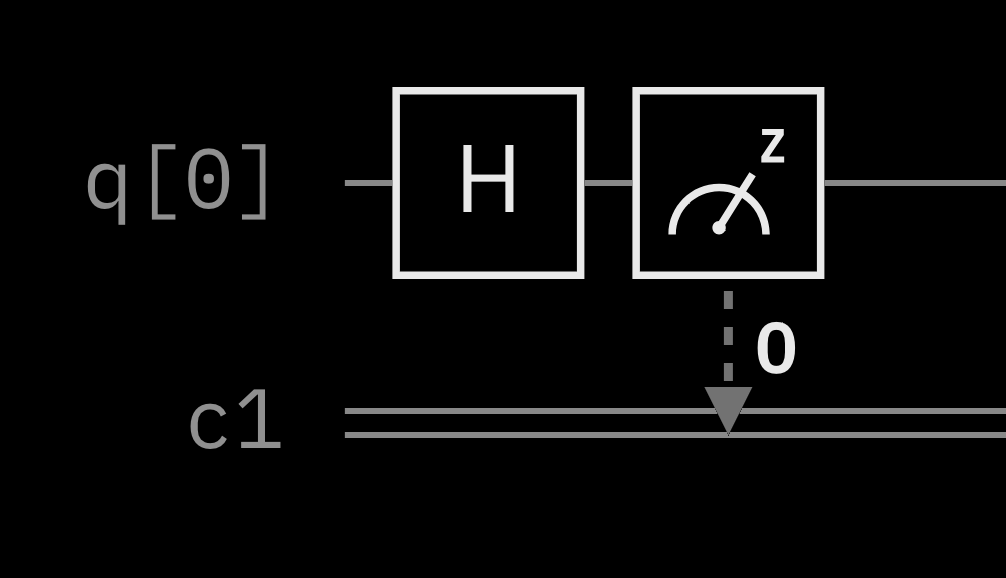
If we add an hadamard gate to our circuit, the result will not always be same, and we can, for example, change the pitch of our note.
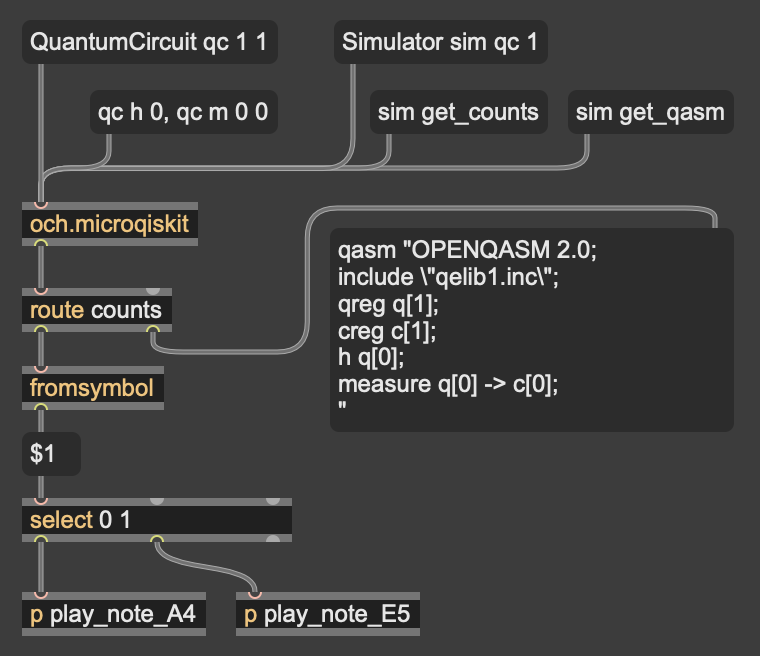
The way we program this with The QAC Toolkit looks like this:
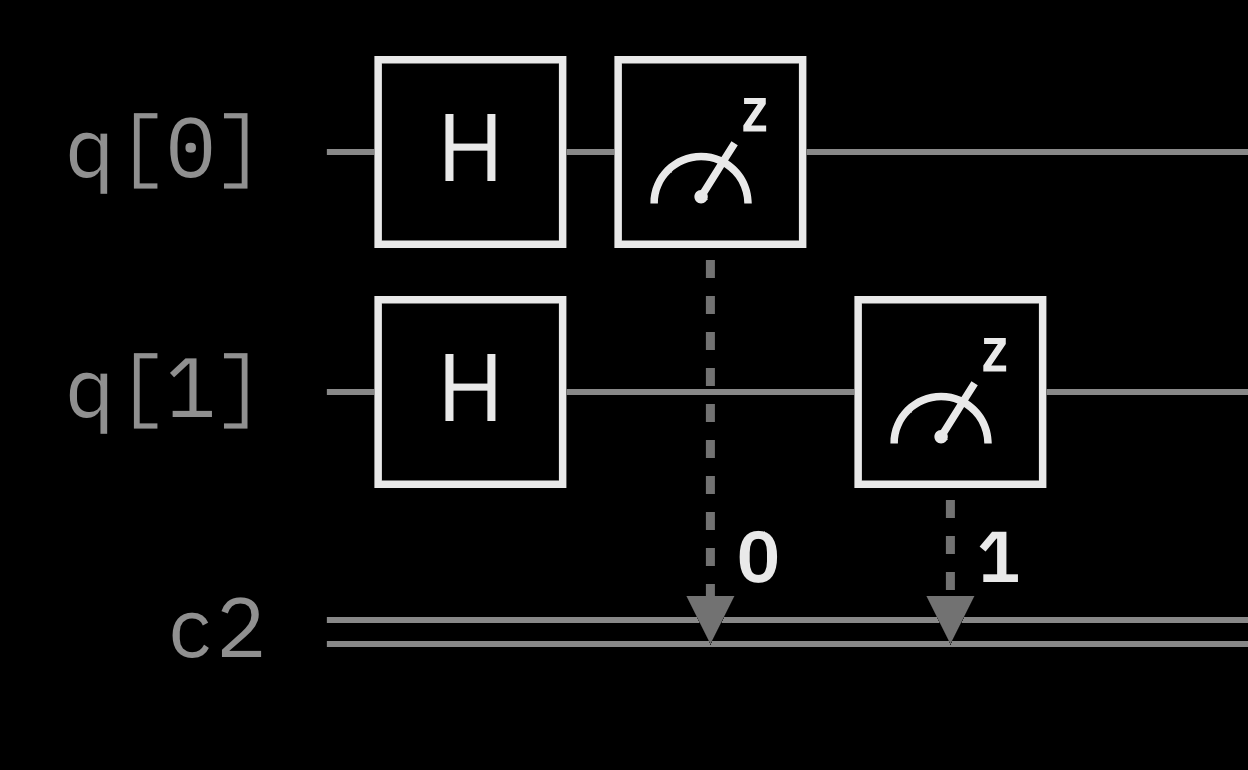
If we add an extra qubit to our circuit, we can increase the number of possible results to choose from.
(tap multiple times to hear the different sounds)
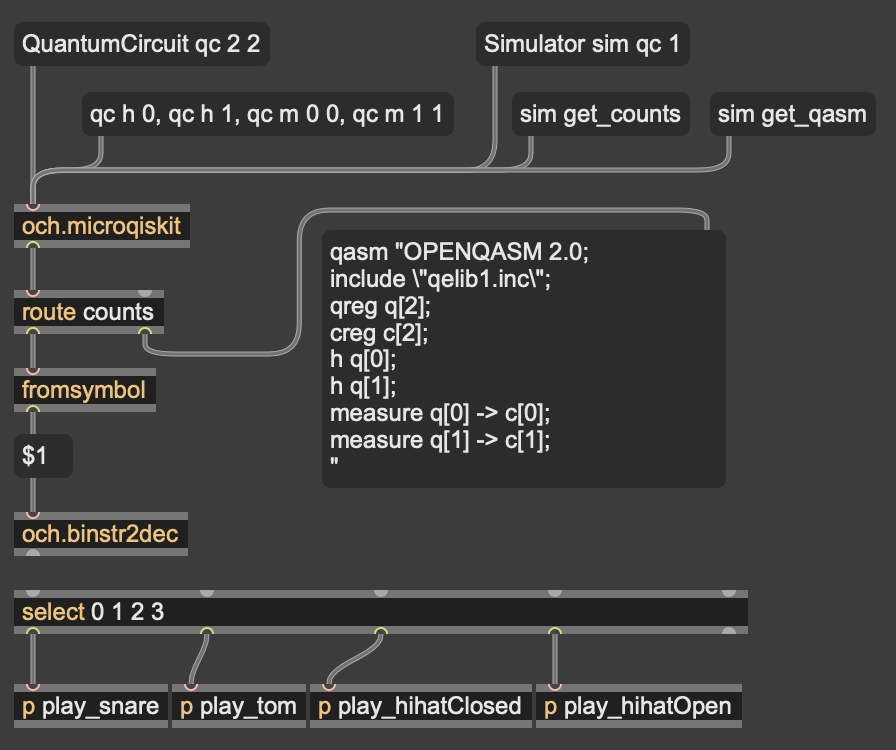
With QAC, our patch looks like this:
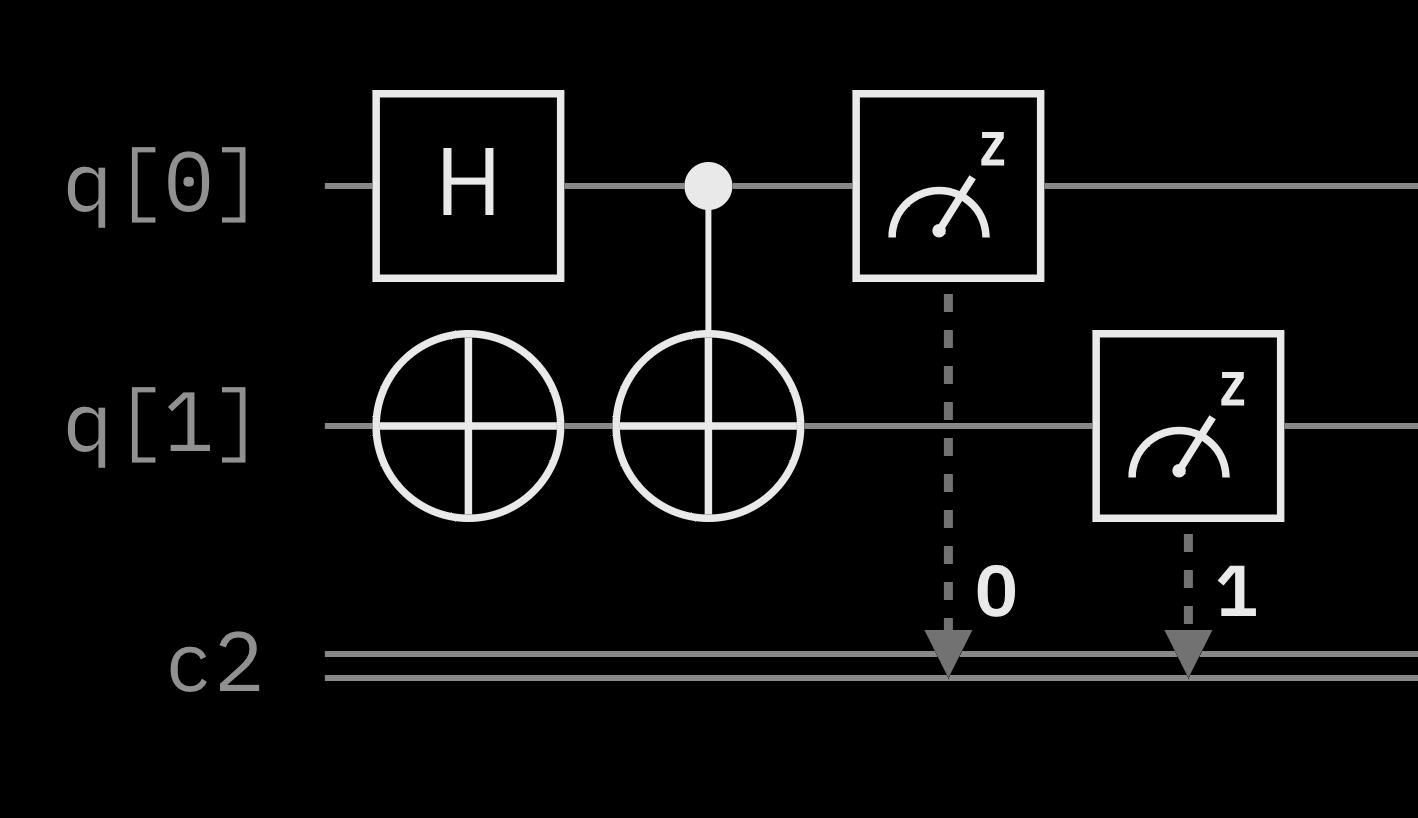
Other quantum gates can be added and we can also make use of entanglement. In this example, we distribute the measurement of each qubit between Alice and Bob. When playing together they create harmony.
(you are )
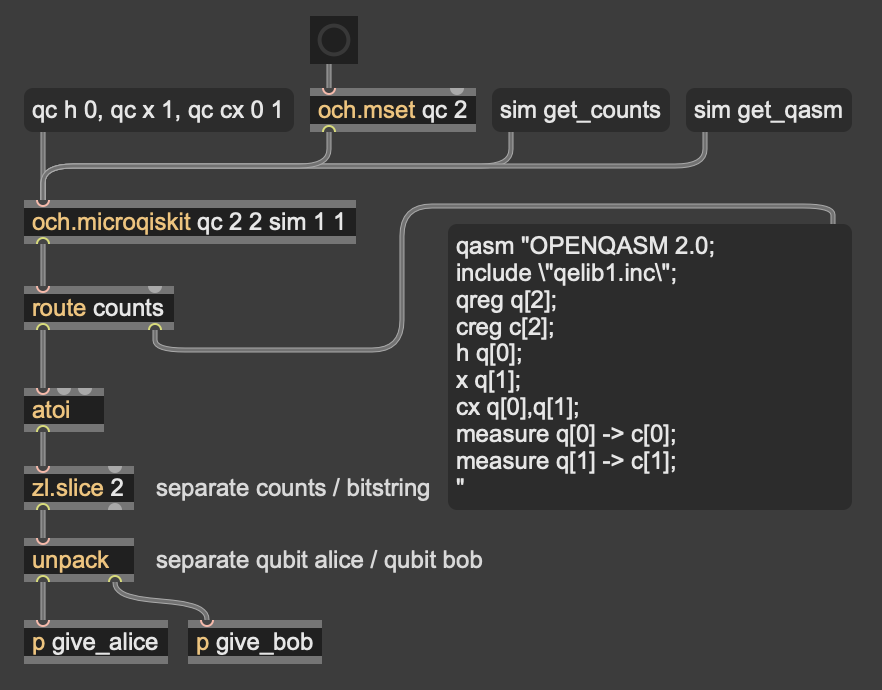
Implementing this circuit with The QAC Toolkit looks like this:
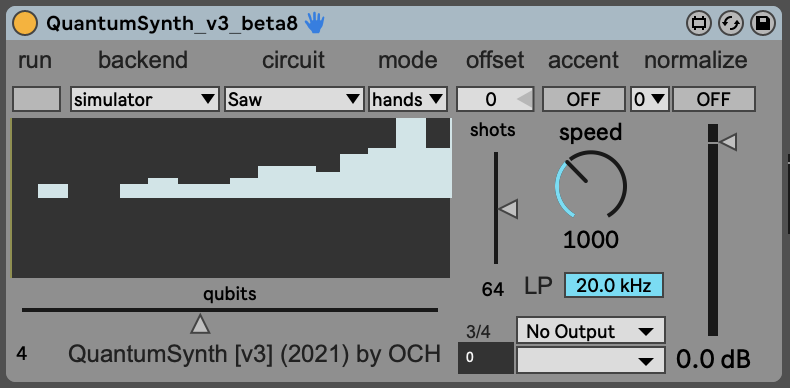
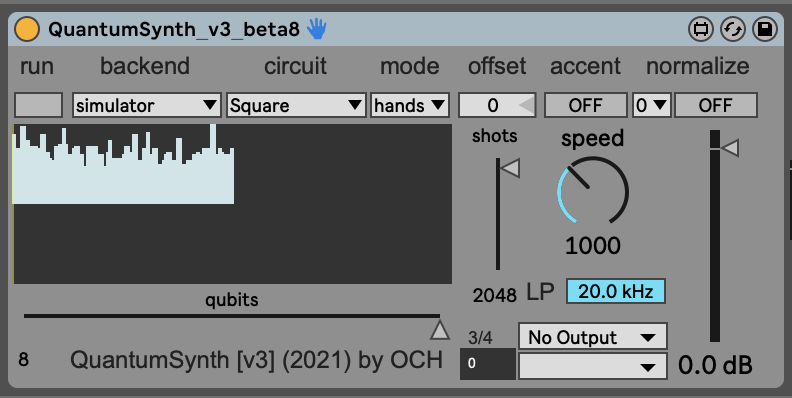
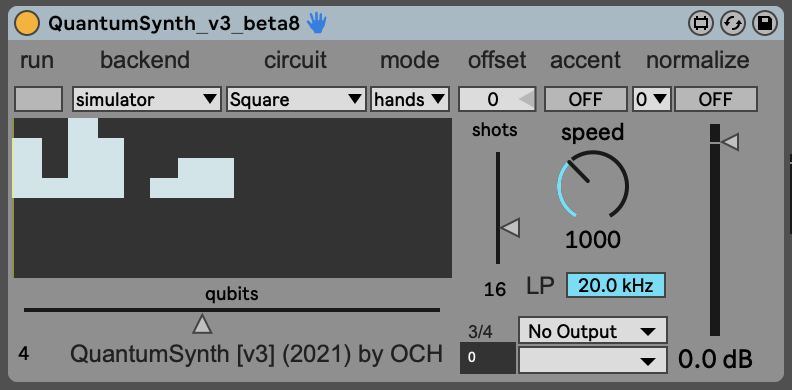
We can also use a variable number of qubits and shots to recreate different synthesizer sounds that take advantage of noise and the probabilistic nature of quantum computing.
This has been used on the Quantum Synthesizer software:
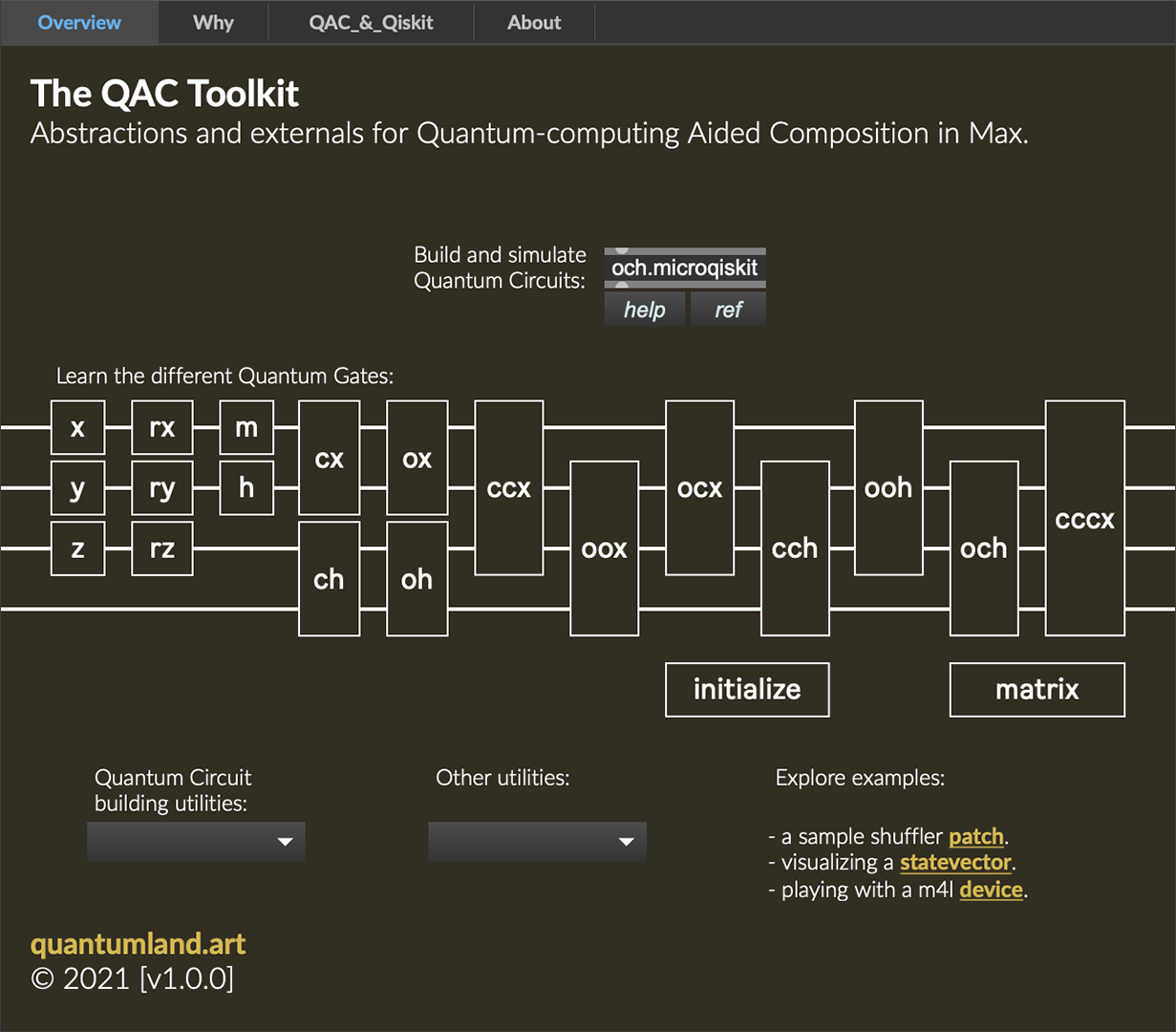
These examples were built with The QAC Toolkit, an open access toolkit for musicians and artists to build run and simulate quantum circuits in the Max visual programming environment.
Learn more about it at quantumland.art/qac and experiment the full version on your desktop. You can also sponsor the development of this project on Github.
This interactive canvas was created by Sarah Trotter Art (visual artist) and OCH (artist-researcher & MSCA fellow at CEIS20, University of Coimbra).